
8/1/2026 · 6 min read
Is There a Best Age for Veneers or Dental Implants?
What actually determines whether you're ready for veneers or implants — age is rarely the real answer.

There's no single ideal age for veneers or implants — what matters is whether your jaw has finished growing (usually by your late teens to early twenties) and whether your bone and gums are healthy, not the number on your birth certificate. Veneers are generally suitable once jaw growth is complete, roughly from the late teens onward. Implants have no upper age limit at all — they're regularly placed successfully in patients in their 70s and 80s, as long as bone volume and general health support the procedure.
Key takeaways
- The real factor for veneers is finished jaw growth, usually by the late teens to early twenties — not a specific birthday.
- There is no upper age limit for dental implants — bone health and general health matter far more than age.
- Older patients may need a bone graft first if volume has reduced, confirmed by a CT scan, not assumed from age alone.
- A named, accredited dentist should assess your individual case — age is one data point, not the deciding one.
Is there a minimum age for veneers?
The relevant milestone for veneers isn't a fixed age, it's whether your jaw and teeth have finished growing, which typically completes somewhere in the late teens to early twenties and varies by individual. Placing a veneer before growth is complete risks a mismatch as the underlying tooth and jaw continue to shift, so reputable clinics wait until growth has stabilised rather than working to a fixed cutoff. For most adult patients past their early twenties, this isn't a consideration at all — the question becomes about tooth and gum health, not age. If you're unsure whether you've reached that point, a dentist can usually tell from a simple examination and your dental history.

Is there an upper age limit for dental implants?
No — age by itself is not a reason to rule out implants, and patients in their 70s and 80s receive them successfully every day. What matters clinically is bone density and volume at the implant site, gum health, and general health factors like uncontrolled diabetes or certain medications that affect healing, none of which are determined purely by age. A CT scan shows your actual bone volume regardless of how old you are, and if it's reduced — which becomes more common the longer teeth have been missing — a bone graft can usually address it rather than ruling implants out. The deciding factors are healing capacity and bone, not a birthday.
Older doesn't mean unsuitable
The single biggest myth about implants and age is that there's a cutoff. There isn't one — what matters is whether your bone and general health support healing, which a CT scan and a short medical history review can confirm at almost any age.
Does age change how long veneers or implants last?
Not directly — the materials themselves age the same way regardless of when they were placed, with quality porcelain veneers and implant-supported crowns both typically lasting 10–15 years or more with good care. What can differ with age is bone remodelling and gum health over time, which is why regular dental check-ups matter more as years pass, whatever your age was when treatment was done. A younger patient getting veneers in their twenties should expect the same maintenance routine as a patient treated in their fifties — daily care and periodic review, not an age-based replacement schedule.
What should you actually get assessed before deciding?
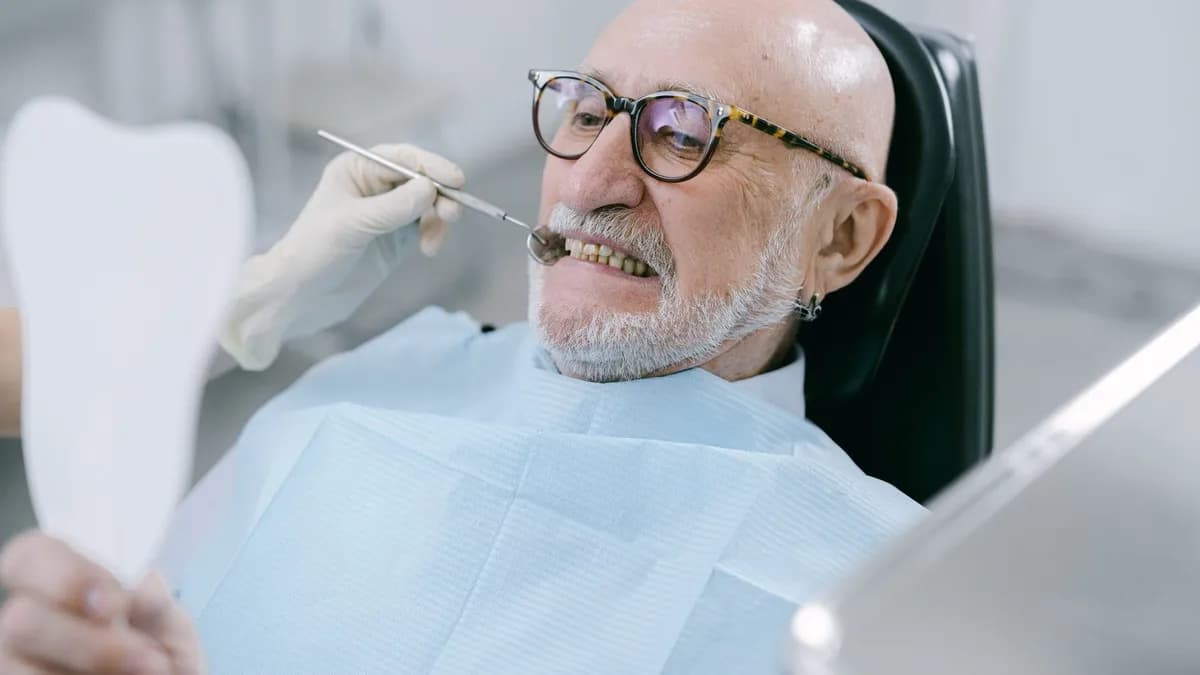
Rather than asking whether you're 'the right age,' the more useful questions are whether your jaw growth is complete (for veneers) and whether your bone volume and general health support healing (for implants) — both answered by an exam, photos and, for implants, a CT scan. A named, accredited dentist reviewing your specific case will give a far more useful answer than any general age rule, and will flag early if a bone graft or a short delay is the more sensible path. Sharing your dental history honestly, including any conditions like diabetes or osteoporosis, helps that assessment be accurate the first time.
Frequently asked
Generally not until jaw growth is complete, usually in the late teens to early twenties, because implants don't move with a growing jaw the way natural teeth can. A dentist can confirm growth status before recommending an alternative in the meantime.
Osteoporosis and some medications used to treat it can affect bone healing, so it's important to disclose this before treatment. Many patients with osteoporosis still receive implants successfully with the right planning and monitoring.
No upper limit — veneers are suitable for adults of any age as long as the underlying tooth and gum are healthy, which is assessed individually rather than by age.
It can be somewhat slower, but healthy older adults commonly heal well after implant surgery. General health and bone quality matter more than age on its own.
Not usually — quality veneers last 10–15 years or more regardless of the age you start, so waiting mainly delays the benefit without extending how long a single set will eventually last.
Get an honest, case-based answer
Share your photos, X-ray or a bit of your dental history and our dentist will tell you honestly what's right for your case — free, within 24 hours.
Message us on WhatsApp