
7/29/2026 · 6 min read
How to Close a Gap Between Your Front Teeth (Diastema) Without Braces
A gap between the front teeth (diastema) can often be closed without braces — here's how, and when orthodontics is still the better choice.

A gap between the front teeth, called a diastema, can often be closed in a single visit using composite bonding or thin porcelain veneers, without braces. Bonding is fast and reversible; veneers give a more permanent, stain-resistant result and typically cost £180–320 per tooth in Turkey. If the gap is wide, uneven, or linked to your bite, orthodontics is still the healthier, more appropriate fix — a dentist should check which applies before you decide.
Key takeaways
- A gap between the front teeth (diastema) can often be closed with composite bonding or thin porcelain veneers — no braces needed.
- Veneers typically cost £180–320 per tooth in Turkey, versus £800–1,200 in Europe, for a permanent, stain-resistant result.
- Bonding is reversible and quicker; veneers last longer but remove a small amount of tooth enamel.
- Wide, uneven or bite-related gaps are often better closed with orthodontics — a dentist should confirm which applies to you.
What actually causes a gap between the front teeth?
A diastema is simply a space between two teeth, most commonly the upper front two, and it has several possible causes. Sometimes it's a straightforward mismatch between tooth size and jaw size, leaving extra room; sometimes it's caused by a labial frenum — the small strip of tissue between your gum and upper lip — attaching lower than usual and holding the teeth apart. A childhood tongue-thrust habit can also push the front teeth forward over time, and in adults a gap can appear later in life as a sign of gum disease causing teeth to shift. Knowing which of these applies to you matters, because it changes whether closing the gap cosmetically is enough or whether the underlying cause needs treating first.
How is a diastema closed without braces?
For a small, stable gap, the two most common non-orthodontic options are composite bonding and thin porcelain veneers, and both work by reshaping the edges of the two teeth so they visually meet in the middle. Bonding uses a tooth-coloured resin sculpted directly onto the tooth in one appointment, with no lab work and no enamel removed. Veneers involve a thin porcelain shell bonded to the front of the tooth, which requires minimal preparation of the tooth surface but gives a more durable, stain-resistant result over the long run. Neither option moves the tooth itself — they change its visible shape — which is exactly why they only suit gaps that don't need real repositioning.
Bonding or veneers often fit when
- The gap is small and stable, not changing over time
- Your teeth are otherwise healthy and reasonably well-positioned
- You want a fast, minimally invasive fix in one visit
- You're not trying to change how your bite closes
Orthodontics fits better when
- The gap is wide or uneven in shape
- It's linked to how your back teeth meet
- You have several spacing issues, not just one gap
- Your dentist finds a bite problem behind the gap
What does the bonding or veneer appointment actually involve?
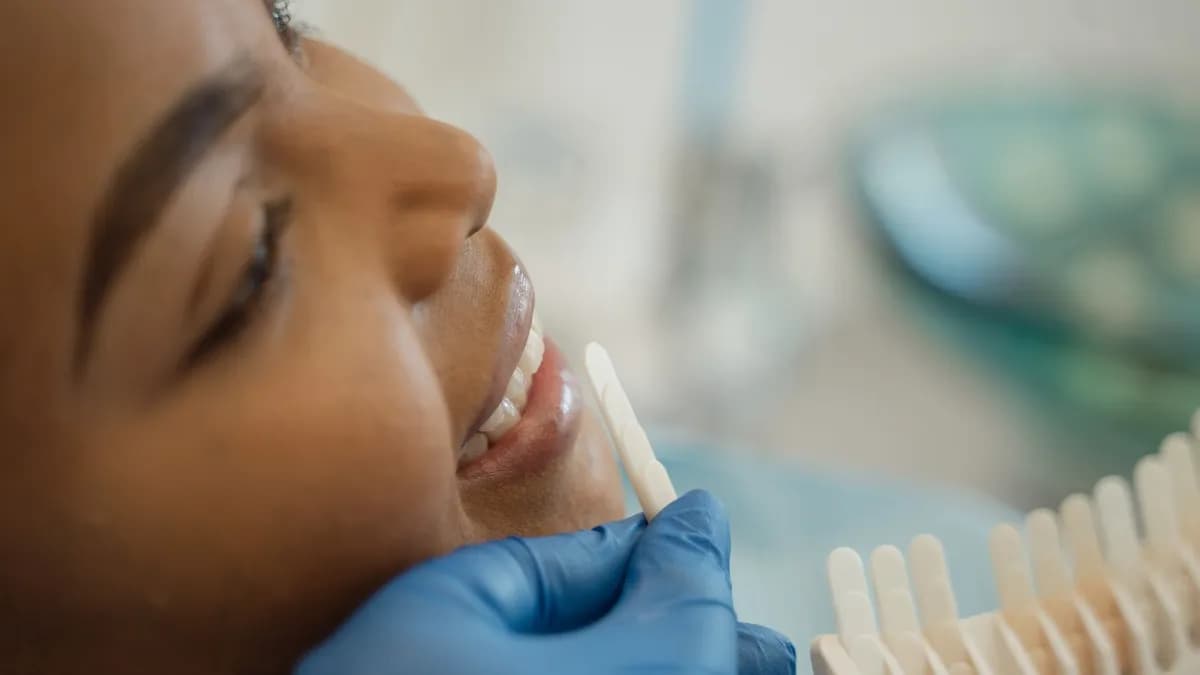
Both treatments start the same way — with a consultation and photos so your dentist can confirm a diastema is the right diagnosis and check there's no underlying bite or gum issue. For bonding, the tooth surface is lightly conditioned, tooth-coloured resin is built up and sculpted by hand, then hardened with a curing light and polished, usually in one sitting. For veneers, a wafer-thin layer of enamel is removed if needed, a precise shade and shape are agreed with you, and the porcelain shells are bonded into place once made, with a bite check at the end either way. Most patients need little to no anaesthetic for bonding, and only a local anaesthetic for veneer preparation.
The gap-closing appointment, step by step
Consultation & photos
Your dentist confirms the gap is suitable for bonding or veneers and rules out an underlying bite or gum cause.
Shade & shape planning
A tooth shade and shape are agreed so the result blends with your natural smile.
Minimal preparation
For veneers only, a thin layer of enamel is removed; bonding needs no removal at all.
Bonding & polish
The resin or porcelain is shaped, bonded, and polished, then your bite is checked.

When should you see a dentist about a gap instead of trying to fix it yourself?
See a dentist before trying any DIY approach — filing teeth at home or using online 'gap band' trends can damage enamel or even loosen a tooth, and neither actually addresses the cause. It's also worth a dental check if the gap is new in adulthood or seems to be widening, since that can be an early sign of gum disease rather than a purely cosmetic issue. And if a gap reappears after previous orthodontic treatment, that usually points to a retention problem worth discussing before jumping straight to bonding or veneers. A proper exam first means the fix — whichever one you choose — is likely to actually last.
Frequently asked
Not if the underlying cause was purely cosmetic and there's no ongoing habit or bite issue pushing the teeth apart. If a tongue-thrust habit or an untreated bite problem is behind the gap, it can gradually reopen, which is why your dentist checks for these first.
Bonding is usually painless and needs little or no anaesthetic. Veneer preparation is done under local anaesthetic if any enamel needs to be removed, and most patients describe it as comparable to a routine filling.
Not comfortably. Forcing a wide gap shut with veneers alone can make the two teeth look oversized or unnatural. In those cases, orthodontics to bring the teeth closer first, followed by conservative cosmetic work if still needed, usually gives a better result.
Bonding typically lasts several years but can chip or pick up stains over time and may need occasional touch-ups. Porcelain veneers are more stain-resistant and typically last 10–15 years or more with good care.
Sometimes. A gap that's new or widening in adulthood can be linked to gum disease affecting the tissue that holds teeth in place, which is worth ruling out with a dental check before any cosmetic treatment.
Get your gap-closing plan
Share a photo of your smile and our dentist will tell you honestly whether bonding, veneers or orthodontics fits your case, with an exact price — free, within 24 hours.
Message us on WhatsApp